MCC Economics asks whether the UAE can push utility-scale solar below one US cent per kilowatt-hour. The article benchmarks the record-setting 2 GW Al Dhafra plant, tracks the collapse in Gulf solar costs, and assesses Dubai’s Phase VII solar-plus-storage tender, where bids were opened in mid 2026.
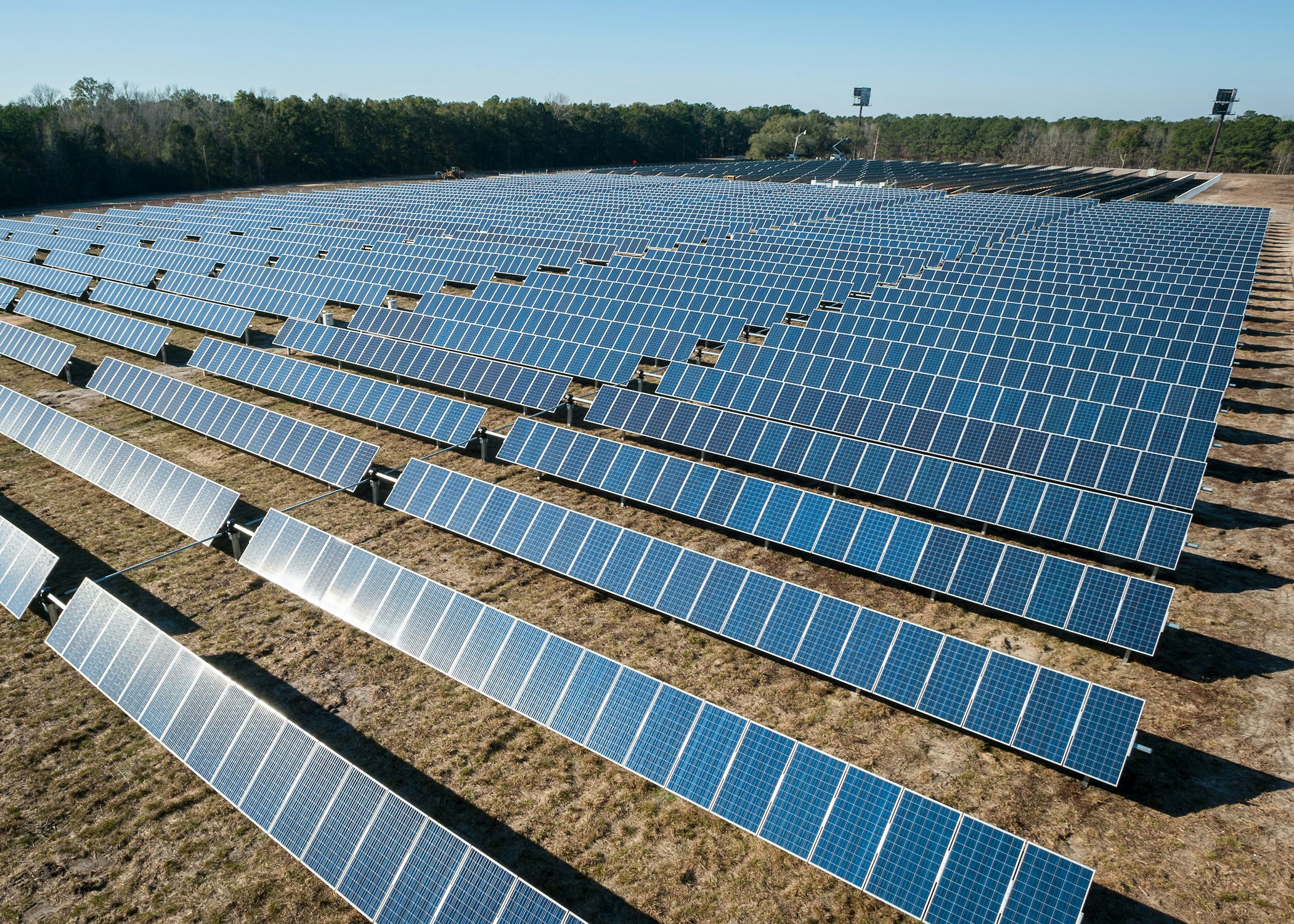
In 2023, the UAE’s Al Dhafra Solar PV project achieved the world’s lowest recorded solar tariff at just 1.32 US cents per kilowatt-hour, about 0.05 AED/kWh. The 2 GW project was developed by a consortium of TAQA, Masdar, EDF Renewables and JinkoPower, and it now powers over 200,000 homes while displacing 2.4 million tonnes of CO2 annually.
Figure 1: The Al Dhafra ownership and contract structure: EWEC as procurer under the power purchase agreement, Dhafrah PV2 Energy Company at the centre, TAQA and Masdar holding 60 per cent alongside EDF Renewables and JinkoPower at 40 per cent, and China Machinery Engineering Corporation as EPC contractor.
Source: project structure as published with the announcements of Dhafrah PV2 Energy Company. Interactive on the live page: hover any party or agreement for its role.
The record-breaking project, located approximately 35 kilometres from Abu Dhabi city, has a capacity of 2 gigawatts and supplies power to the plant’s off-taker, Emirates Water and Electricity Company. Upon completion in June 2023, Al Dhafra was the world’s largest single-site solar plant, using almost 4 million bifacial solar panels to generate enough electricity for approximately 200,000 homes across the UAE. The plant deploys crystalline bifacial technology, which uses both the front and back of the panels to raise output.
In less than a decade, UAE solar costs plummeted from 0.21 AED/kWh at MBR Phase 2 to 0.05 AED/kWh at Al Dhafra, a 76 per cent reduction. Figure 2 shows the two published anchors of that fall.
Figure 2: Levelised cost of electricity for UAE centralised solar, AED/kWh: MBR Phase 2 against Al Dhafra, the two tariffs cited in this article.
Source: published tariffs, MCC Economics. Interactive on the live page: hover a bar for its value.
DEWA’s Phase VII tender opened in February 2025 for 1,600 MW to 2,000 MW of solar PV with a 1 GW, six-hour battery, one of the world’s largest solar-plus-storage procurements, with commissioning in phases from August 2027, per DEWA’s invitation for expressions of interest.
The tender has grown and moved. In November 2025 DEWA confirmed the phase at 2,000 MW of solar with a 1,400 MW battery of six-hour duration, 8,400 MWh in total, after 49 expressions of interest, with the request for proposals issued to qualified bidders on 20 October 2025, a scope increase PV Magazine and MEED both reported. The bid deadline was extended to 1 May 2026; bids were received on 1 July 2026 and technical and financial offers were opened, and MEED has since reported that a lowest bidder has emerged, with ACWA Power among the bidders. None of these sources has yet published the winning tariff, and that number is the answer to this article’s question.
The most likely routes to beating the record:
Our call: we could see bids below 0.010 US dollars per kilowatt-hour by 2027, absent cost increases from tariffs, inflation, interest rates, construction or the wider supply chain.
Dubai did not just beat the world on price: it rewrote the rules. Now it is going for another record, and the bids are in. Watch the award.
I was delighted that MCC's work was completed on time, and within budget, helping us deliver important changes and improvements, to the benefit of our stakeholders. MCC's report is published on the CCC website.

I am delighted to recommend MCC Economics. Specifically, I worked closely with PJ, who helped us with our Nuclear and CCUS projects. PJ helped us develop new policies and answer questions from our stakeholders. His support helped us deliver important changes and improvements, to the benefit of our stakeholders.

MCC Economics has helped us better understand the most important issues for our stakeholders, including: charges, shareholder returns, debt payments and inflation impacts.

I am delighted to recommend PJ and his team at MCC Economics. We've been working together on National Policy Statements to help meet net zero targets for 2030 and 2050. We initially appointed MCC Economics to support us on offshore wind consultation analysis and have recently reappointed MCC Economics to undertake a larger consultation analysis role across all sectors, including hydrogen, CCUS and networks. I can confirm that PJ and his team have shown excellent spreadsheet skills, alongside very good project management, planning and analysis skills, helping us deliver important changes, and continuous improvements, to the benefit of our stakeholders.
I am delighted to recommend PJ and his team from MCC Economics. They helped us with our price controls for Heathrow airport and for NATS (En Route) plc (the air traffic services provider). Specifically, the MCC team helped us deliver important changes and improvements to our financial models and supporting policy documents, to the benefit of our stakeholders.

I am delighted to confirm that I worked with PJ on a retail project in 2015. The project helped stakeholders understand electricity costs and charges. Specifically, the project helped us explain to stakeholders, internally and externally, why electricity charges differed across the regions (GB, NI & Ireland). PJ was a key member on the project team, which helped deliver changes and improvements in the understanding of energy retail.
.png)

Evidence-based analysis for transparent, defensible, and effective decision-making.
© All rights reserved – MCC Economics 2026.


.jpg)
.jpg)