

MCC Economics delivers independent, evidence-based analysis across economics, finance, and regulation. With experience spanning energy, water, infrastructure, and public policy, the firm supports transparent and effective decision-making. Clients across the UK, Europe, and the Middle East benefit from rigorous analysis, financial modelling, and clear policy insight.
MCC Economics publishes independent analysis and commentary on issues at the intersection of economics, finance, and regulation. Our publications draw on experience from projects across energy, water, infrastructure, and public policy - providing evidence-based insights that support transparent, accountable, and effective decision-making.
MCC Economics works with governments, regulators, and organisations across the UK, Europe, and the Middle East.Our case studies highlight how rigorous analysis, financial modelling, and policy insight have supported clients in making transparent, defensible, and effective decisions. Each project reflects our commitment to clarity, independence, and analytical precision.

Explore how MCC helped UK Export Finance enhance its product development process by comparing UKEF's methods with those of peer organisations ranging from export credit agencies to corporate banks and public financial institutions.

UK Export Finance (UKEF), the UK’s export credit agency, engaged MCC Economics to conduct an in-depth benchmarking study to assess and refine its approach to product development. By comparing UKEF's methods with those of peer organisations—ranging from export credit agencies to corporate banks and public financial institutions—we helped UKEF identify areas of strength and key opportunities for innovation and improvement.
UK Export Finance (UKEF) sought to benchmark its product development process against a diverse set of peers, including export credit agencies, commercial banks, and fintechs. UKEF wanted to identify both its strengths and areas for improvement, understand how other institutions generate and evaluate product ideas, and gather insights to support internal reviews, audits, and future planning.
MCC delivered a comprehensive and collaborative review of UKEF’s product development approach, incorporating both quantitative benchmarking and qualitative insights from a wide network of international financial institutions. Our contributions included:
Designed a robust benchmarking questionnaire in collaboration with UKEF’s board and senior stakeholders, covering areas such as:
Found UKEF’s governance to be in line with its peers, particularly in:
Identified areas with potential for improvement, including:
Highlighted best practices from comparators, such as:
Delivered a formal benchmarking report summarising findings and strategic recommendations for the UKEF Board, Internal Audit team, and Product Directors.
Recommended that UKEF:
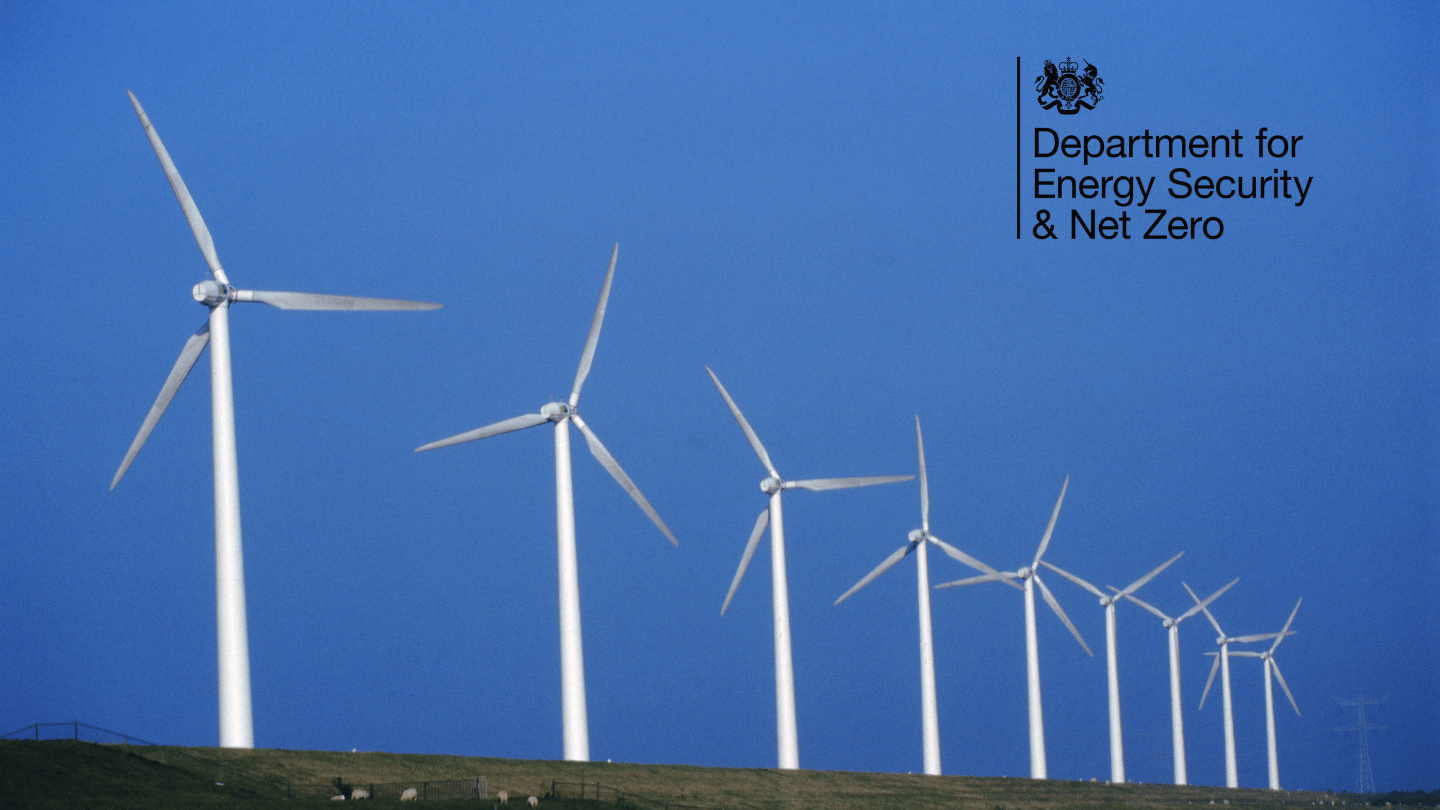
Explore our case study to see how MCC supported the Department for Energy Security and Net Zero (DESNZ) in analyzing stakeholder responses to the Offshore Wind National Policy Statement (NPS) consultations.
Explore our case study to see how MCC supported the Department for Energy Security and Net Zero (DESNZ) in analyzing stakeholder responses to the Offshore Wind National Policy Statement (NPS) consultations. Our in-depth thematic analysis, expert policy discussions, and comprehensive reporting informed the UK Government’s policy decisions, ensuring a balanced approach to energy security, climate commitments, and infrastructure development.
As part of the UK’s commitment to achieving Net Zero by 2050, DESNZ sought to update the Offshore Wind National Policy Statement (EN-3) to reflect evolving energy needs, environmental considerations, and regulatory challenges. To achieve this, DESNZ launched a public consultation and re-consultation process, receiving thousands of responses from key stakeholders, including energy industry representatives, environmental organisations and NGOs, planning and regulatory authorities, aviation, shipping, and seabed users, and local councils and community groups.
MCC played a pivotal role in reviewing, analyzing, and synthesizing the consultation responses, delivering:

Explore our case study to see how MCC supported the Department for Energy Security and Net Zero (DESNZ) in analyzing thousands of stakeholder responses for the 2021 public consultation and the 2023 re-consultation on the Energy National Policy Statements.
Explore our case study to see how MCC supported the Department for Energy Security and Net Zero (DESNZ) in analysing thousands of stakeholder responses for the 2021 public consultation and the 2023 re-consultation on the Energy National Policy Statements. Our structured approach, data-driven insights, and expert recommendations helped shape the UK Government’s response, ensuring energy policies align with net-zero commitments and energy security objectives.
DESNZ sought expert analytical support to process, assess, and interpret responses from stakeholders regarding updates to the Energy National Policy Statements (NPSs). These NPSs guide the planning and regulation of nationally significant energy infrastructure projects, ensuring alignment with the UK’s Net Zero Strategy and British Energy Security Strategy (BESS).
MCC played a lead role in managing the consultation response process, delivering:

Explore our case study to see how MCC supported the Department for Energy Security and Net Zero (DESNZ) in analyzing over 55,000 responses to the Climate Compatibility Checkpoint consultation for North Sea oil and gas licensing.
Explore our case study to see how MCC supported the Department for Energy Security and Net Zero (DESNZ) in analyzing over 55,000 responses to the Climate Compatibility Checkpoint consultation for North Sea oil and gas licensing. Our comprehensive review and thematic analysis provided key insights to shape the government’s policy response, ensuring a data-driven approach to future licensing decisions.
The Department for Energy Security and Net Zero (DESNZ), formerly known as BEIS, required expert assistance in reviewing and analyzing public consultation responses for the Climate Compatibility Checkpoint for Future Oil and Gas Licensing. This checkpoint was introduced to evaluate whether future oil and gas licensing rounds align with the UK’s climate objectives, net-zero commitments, and energy security needs. The department needed a systematic approach to processing responses, quantitative and thematic analysis, a detailed view of cited documentation and a final consultation report.
MCC played a critical role in leading the consultation analysis, delivering:
Through our analysis, we identified key recurring themes in responses, including:

Explore our case study to see how MCC helped NATS En Route and the Civil Aviation Authority (CAA) refine their financial modelling processes.
Explore our case study to see how MCC helped NATS En Route and the Civil Aviation Authority (CAA) refine their financial modelling processes. From identifying critical calculation errors to improving methodologies and updating key inputs, our expertise ensured a more reliable framework for aviation price controls, addressing delays and strengthening financial decision-making.
In 2021, NATS En Route required an in-depth review of its financial model to assess the accuracy and reliability of recent modifications. The model had been updated to reflect the traffic-risk-sharing mechanism, which adjusts revenues based on fluctuations in air traffic and the significant decline in air traffic due to COVID-19, which had major financial implications for NATS. To ensure confidence in the financial projections, NATS needed a full validation of the financial model, ensuring that the traffic-risk-sharing mechanism and other adjustments were correctly implemented.
MCC played a pivotal role in helping NATS and the CAA strengthen their financial models, delivering:

Explore our Thistle Wind Partners (TWP) case study to see how MCC developed a bespoke financial model to determine the Contracts for Difference (CfD) strike price.
Explore our Thistle Wind Partners (TWP) case study to see how MCC developed a bespoke financial model to determine the Contracts for Difference (CfD) strike price. Our work supported TWP’s bid submission for the UK Government’s low-carbon electricity auction rounds, ensuring competitive pricing for the development of 2GW of offshore wind capacity.
Thistle Wind Partners (TWP) required expert financial modeling support to determine the CfD strike price for their bid submission in the UK Government’s low-carbon electricity generation auction rounds. With 2GW of offshore wind capacity under development, TWP required a precise and adaptable financial framework to navigate the competitive bidding landscape and secure government-backed CfD contracts.
MCC played a critical role in supporting TWP’s bid submission strategy by delivering:
.png)

Evidence-based analysis for transparent, defensible, and effective decision-making.
© All rights reserved – MCC Economics 2026.
.jpg)


.jpg)

.jpg)